
Google Is Changing How People Find Practices. Is Your Website Keeping Up?
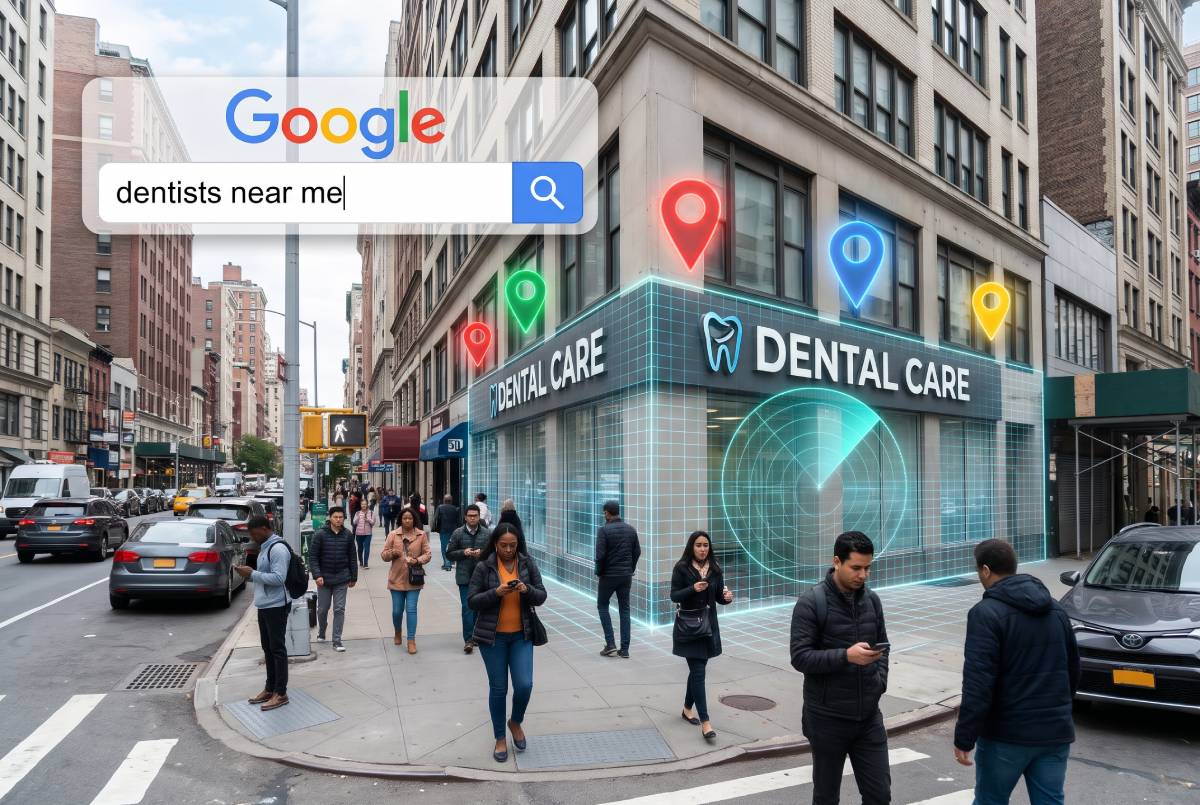
If you haven’t noticed, the way people search for information is changing. Not just a little, either. The familiar routine of typing a few words into Google, scrolling through a list of websites, and clicking on the first few results is becoming only one part of the search experience.
Today, people are asking longer questions, using AI-powered search tools, comparing answers, watching videos, reading reviews, and looking for recommendations before deciding which business to contact.
For healthcare practices, this creates both an opportunity and a challenge.
You may have heard that traditional SEO is disappearing, that AI is replacing Google, or that businesses need an entirely new kind of website optimization to remain visible. You’ve probably also received a few emails promising that someone can get your practice recommended by ChatGPT or put you at the top of every AI search result.
Before you start changing your entire marketing strategy, let’s take a step back.
Google is changing how people discover information, but that doesn’t mean your website has become less important. It means your website needs to do a better job of providing the information people are looking for.
And that’s a very important distinction.
Search Is No Longer Just About Typing in a Few Keywords
Think about how someone might search for a healthcare provider today.
A few years ago, someone looking for a dentist might have typed “dentist near me” into Google and clicked on a few local listings.
Today, that same person might ask:
- Who is a good dentist near me who offers dental implants?
- What should I know before getting dental implants?
- How long does the dental implant process take?
- What questions should I ask before choosing a provider?
These searches are more conversational and often involve several questions before a decision is made.
Google’s AI Overviews and AI Mode are designed to help people explore these types of questions. Instead of simply presenting a list of websites, Google’s AI-powered features can organize information, summarize topics, and provide links to sources that help people investigate further.
And Google continues to develop these experiences.
On October 15, 2026, Google announced additional changes to AI Overviews and AI Mode, including more prominent links within responses, dedicated website links for certain searches, and improved ways to discover original sources and creators.
What does this mean for your practice?
It means that your website needs to be a useful source of information, not simply an online brochure listing your services and telephone number.
Does This Mean Traditional SEO Is Dead?
Absolutely not.
In fact, Google’s own Search Central documentation specifically explains that the foundational SEO practices businesses have used for years remain relevant to its AI-powered search features.
That is worth paying attention to.
There is no magic AI setting you can turn on to guarantee that Google or an AI search tool will recommend your practice. Google still needs to be able to discover, crawl, understand, and index your website content.
That means the fundamentals still matter:
- A properly functioning website.
- Clear service and treatment pages.
- Helpful, original content.
- Accurate business information.
- A good mobile experience.
- Relevant internal links between website pages.
- A strong local search presence.
- Content that demonstrates real knowledge and expertise.
Some marketing companies are making AI search sound like an entirely separate discipline that requires a completely new set of expensive services.
Be careful.
New technologies deserve attention, but that doesn’t mean every new marketing acronym represents a new requirement for your business.
Your practice needs a website that works for people first and is structured so search engines can understand it.
Those two goals should go hand in hand.
Your Website Needs to Answer More Than “What Services Do You Offer?”
Here’s where many practice websites fall short.
A website may have a page for dentistry, a page for cosmetic procedures, or a page for veterinary services. It may look attractive and contain all the necessary contact information.
But does it actually answer the questions potential patients are asking?
Imagine someone considering a cosmetic treatment.
They may want to know:
- What does the treatment accomplish?
- Who is a good candidate?
- What does the process involve?
- How much recovery time is needed?
- What should they expect during a consultation?
- What questions should they ask their provider?
If your website only says, “We offer advanced cosmetic treatments. Call today to schedule,” you’re missing an opportunity.
A helpful website goes further.
It explains the service, provides accurate information, introduces the provider, and helps the visitor understand what the next step looks like.
The same principle applies to veterinary practices.
A pet owner researching dental cleanings for their dog may want to understand why they are recommended, what happens during the procedure, and how to recognize potential dental problems.
A medical practice might provide information about preventive screenings, common symptoms, or what patients should bring to an appointment.
These are the kinds of questions your website should address.
Don’t write content just to fill a page or insert keywords. Write because you have something valuable to teach the people you want to reach.
AI Search Makes Original Expertise Even More Important
Here’s something I want practice owners to think about.
If someone asks an AI tool a question about a healthcare service, the AI may be able to summarize general information from multiple sources.
So why would that person need to visit your website?
Because general information isn’t the same as getting to know your practice.
Your website can explain how your providers approach a particular service, what patients can expect at your office, what makes your process different, and how someone can arrange a consultation.
You have real people, real experience, and real knowledge behind your business.
That is something worth communicating.
Google’s guidance for website owners emphasizes helpful, reliable, original content rather than pages that simply repeat information already available everywhere.
This is one reason we continue to believe that educational blogging is valuable.
A well-developed article can answer a question, demonstrate knowledge, introduce a service, and give a potential patient another reason to explore your practice.
However, there is an important difference between publishing useful educational content and producing dozens of generic articles simply because someone says your website needs more content.
More isn’t automatically better.
Quality, accuracy, originality, and relevance matter.
Local SEO Still Deserves Your Attention
For most healthcare practices, attracting people in the surrounding community is the priority.
You probably aren’t trying to attract patients from across the country. You’re trying to connect with people who live or work within a reasonable distance of your office.
That’s why local SEO remains an important part of your marketing strategy.
Your Google Business Profile, website, local business information, reviews, and service descriptions all help people understand where you are and what you offer.
Here are a few things worth reviewing:
Your Google Business Profile
Is your address correct? Are your hours current? Are your services listed accurately? Are your photographs up to date?
Your Website Location Information
Does your website clearly identify the communities you serve? Is your contact information easy to find? Are your location and service details consistent?
Your Reviews
Are you consistently encouraging patients or clients to share honest feedback? Are you responding professionally and appropriately? Remember that reviews help potential patients evaluate your practice, although they do not guarantee a particular search position.
Your Service Pages
Do your pages explain the services you actually provide and the areas you serve? Are they informative enough to help someone decide whether to contact you?
These aren’t glamorous marketing tasks, but they are important pieces of a healthy online presence.
Don’t Fall for Every New AI Marketing Promise
This is probably the section I want practice owners to read most carefully.
As AI search has become more popular, a new collection of marketing promises has appeared.
You may hear terms such as AEO (Answer Engine Optimization) and GEO (Generative Engine Optimization). These terms are used to describe efforts to improve how content appears in AI-generated answers and other search experiences.
There is nothing wrong with understanding how these developments affect online visibility.
The problem comes when someone tells you that your existing SEO is worthless, your website needs to be completely rebuilt for AI, or a special formula will guarantee that ChatGPT, Gemini, or another AI platform recommends your practice.
No reputable marketing professional can guarantee that.
Even Google’s own guidance makes it clear that there are no special shortcuts or separate AI markup requirements that guarantee inclusion in AI Overviews or AI Mode.
What should you be doing instead?
- Maintain a technically sound website.
- Publish original, useful information.
- Make your services easy to understand.
- Keep your business information accurate.
- Demonstrate the experience and expertise behind your practice.
- Monitor your search performance and adjust your strategy as needed.
AI is another development in the marketing environment. It deserves a place in the conversation, but it shouldn’t become an excuse to abandon everything that has helped build your online presence.
Five Things to Review on Your Website Before 2027
As we approach a new year, November is a good time to evaluate your online presence.
Here are five questions every practice owner should be asking.
1. Does Your Website Reflect Your Current Practice?
Have you added services, providers, equipment, or new treatment options? Does your website reflect those changes?
An outdated website can create confusion and make your practice look less active than it really is.
2. Are You Providing Enough Educational Information?
Look at your service pages and blog articles. Are you answering common questions? Is the information accurate, relevant, and easy to understand?
3. Is Your Website Easy to Use on a Phone?
Many people will first encounter your practice on a mobile device. Can they quickly find your telephone number, services, location, and appointment information?
4. Are You Monitoring More Than Your Search Rankings?
Rankings are important, but they don’t tell the entire story.
Look at website traffic, search impressions, inquiries, phone calls, appointment requests, and actual new patient conversions.
Google Search Console and website analytics can help identify opportunities and problems. Your practice should also have a way to understand whether those online interactions are turning into real business.
5. Is Your Marketing Strategy Built for the Long Term?
Are your SEO, website content, social media, online advertising, and branding working toward the same goals?
Or are you simply trying something new every time another marketing trend appears?
A successful online presence takes planning, consistency, and ongoing attention.
The Future of Search Is Changing. Your Marketing Strategy Should Evolve, Too.
There is no question that AI is changing how people discover information. Search engines are becoming more conversational, social platforms are expanding their search capabilities, and potential patients have more ways to research a practice than ever before.
But the fundamentals of good marketing haven’t disappeared.
People still want accurate information. They still want to know who is providing their care. They still want to feel comfortable with their decisions. And they still need an easy way to contact a practice when they’re ready.
Your website plays an important role in all of that.
At Ai Healthcare Marketing, we believe the answer isn’t to chase every new technology or rebuild your marketing strategy every time a new search feature appears.
It’s to understand what’s changing, use the tools available to us, and continue building a strong foundation for your practice.
We use AI-powered tools to help us gather insights, evaluate opportunities, and make informed marketing decisions. But technology doesn’t replace the experience, creativity, strategy, and personal attention required to build a successful brand.
We’ve spent decades helping healthcare practices grow, and one lesson continues to hold true: Consistency, trust, and a well-planned strategy will always matter.
Your website isn’t just a place to send people. It’s one of the most important ways your practice introduces itself, demonstrates its expertise, and earns the opportunity to build a relationship.
Don’t let the changes in search convince you to abandon that investment.
Instead, make sure your website is ready for the way people are searching today.
Need help evaluating your website, SEO, or overall online visibility? Ai Healthcare Marketing can help you understand where you stand, identify opportunities, and develop a strategy that keeps your practice moving forward.